
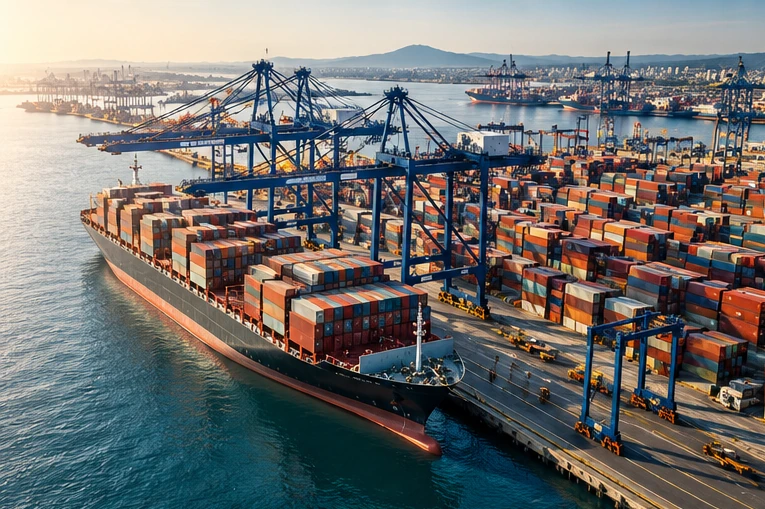
Chile’s long north–south geography makes the final delivery point unusually important. A sea arrival serving Santiago does not tell you the onward cost to a mine in the north or a project site in the south.
Seaports and air cargo gateways
San Antonio and Valparaíso are plausible central-coast options for the Santiago market; they are not automatic choices for Antofagasta, Concepción or a remote mine. Validate inland mileage, route restrictions and specialised vehicles with the receiving site.
Selected sea gateways used for initial planning: San Antonio (CLSAI), Valparaíso (CLVAP). These codes are location references, not proof of a particular vessel call or a terminal booking. Airports worth checking for a relevant cargo schedule include SCL (IATA). Confirm live service, terminal, restrictions and airport cargo facilities before booking.
Where the cargo actually needs to go
Mining equipment, agricultural products and packaged consumer goods have different packing and inspection risks. Industrial projects can require project-cargo surveys, while temperature-sensitive exports may need a verified cold chain.
Inland-delivery detail that belongs on the booking instruction: Provide final comuna/city and site access conditions, cargo lifting points, packaging records and broker confirmation of importer paperwork. A port or airport name alone is not an adequate delivery address; include the consignee's receiving rules in the first quote request.
Choosing sea, air, road or intermodal
Maritime freight suits consolidated or containerised loads, with air cargo through Santiago useful for selected urgent and high-value consignments. Do not equate airport arrival with warehouse delivery; local collection may be material.
If cargo is delivered to a high-altitude or remote industrial site, confirm vehicle suitability, access hours, unloading equipment and whether an escorted movement is required. These details cannot be inferred from the nearest port name.
Customs responsibility and documents
Chile’s Servicio Nacional de Aduanas is the reference for customs procedures and classifications. Product controls, sanitary permits and document requirements must be checked with the competent authority before the shipment is released to the carrier.
Agree in writing who is the importer/exporter of record, who prepares declarations, and who pays duties, handling and destination fees. Commodity classification, origin and any required licence must be checked against current official instructions; this guide does not provide a customs decision.
A practical route-planning example
A crated pump destined for central Santiago can be priced from San Antonio plus truck delivery. The same crate going to an inland mining site warrants separate heavy-haul and project acceptance checks; simply adding kilometres is not enough.
Make the rate comparison consistent: same packed goods, same origin and delivery point, same Incoterms® rule, same expected delivery condition and a clear list of excluded charges. Published transit times and prices have intentionally not been guessed here.
Official references and editorial checks
Reference details were reviewed for this editorial update on 25 October 2026. Authority rules, terminal services, code assignments and import restrictions can change. Check the official source and your appointed broker or carrier before a shipment is tendered.
Related tools and next reading
For a Chile shipment, use the appropriate mode guide and calculator to prepare dimensions before approaching a provider. These links help with planning; they do not represent live capacity or an approved booking.