
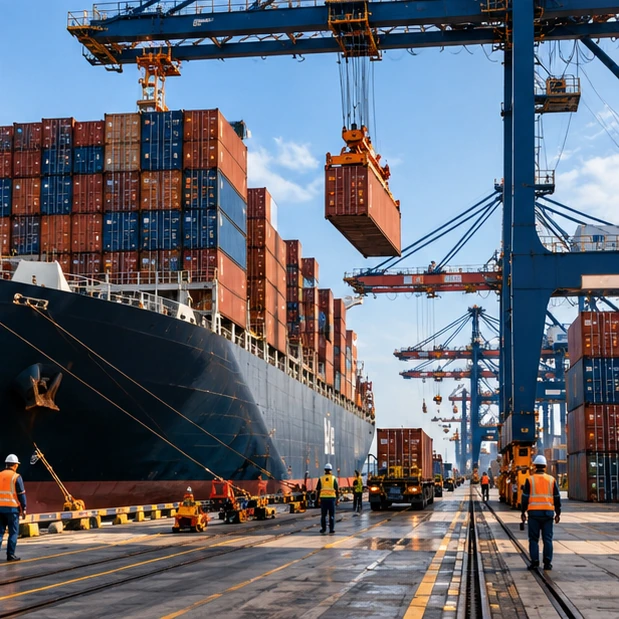
Ocean freight starts well before the vessel sails. The real work is choosing an origin terminal, deciding between a dedicated container and consolidation, and allowing for the landside moves at both ends.
Start with the cargo, not the vessel
A sea freight price may cover only the port-to-port leg. Ask separately about collection, export handling, terminal charges, customs brokerage, destination handling and final delivery.
Price the entire journey
FCL gives a shipper the use of a container; LCL groups smaller consignments. Compare cargo volume, sensitivity to extra handling and the time needed for consolidation rather than choosing on price alone.
Allow for timing and exceptions
Provide packed dimensions, gross weights, commodity details, container loading arrangements and whether the goods need temperature control or special handling.
Information needed for a useful quote
Confirm the loading cut-off, documentation deadlines, free-time arrangements and the party responsible for demurrage or detention before equipment is released.
Questions worth checking
- FCL or LCL: choose according to volume, handling and schedule
- Confirm the origin and destination charge breakdown
- For loaded containers, arrange VGM according to applicable requirements
- Identify who handles clearance and inland delivery
Compare the total ocean movement, not just the vessel rate
A distributor buying twenty pallets of boxed household goods can compare FCL and LCL only after packing dimensions are clear. FCL can reduce shared handling, but the container return and delivery access may outweigh its cost advantage; LCL needs a realistic consolidation and deconsolidation plan.
Request carrier confirmation of the origin cut-off, bill of lading instructions, container equipment and destination handling. Ask separately whether terminal fees, customs entry, storage, detention and final drayage are included.