
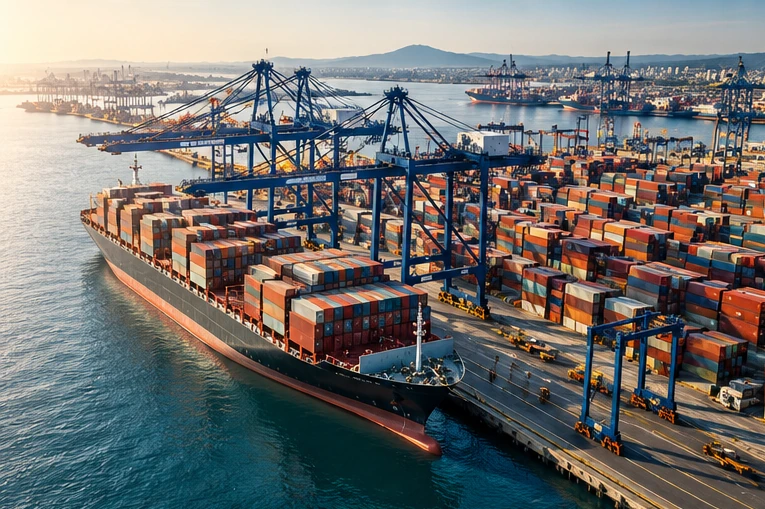
The United States has multiple coastal and inland supply chains. Los Angeles/Long Beach, Savannah and New York-area container routes may lead to very different distances and customs handovers.
Seaports and air cargo gateways
Southern California’s ports are suitable candidates for western distribution, while Savannah and New York serve different eastern corridors. Midwest cargo can require intermodal rail, regional trucking or an inland bonded movement; a port quote alone is incomplete.
Selected sea gateways used for initial planning: Los Angeles (USLAX), Long Beach (USLGB), Savannah (USSAV), New York (USNYC). These codes are location references, not proof of a particular vessel call or a terminal booking. Airports worth checking for a relevant cargo schedule include LAX, ORD, MIA (IATA). Confirm live service, terminal, restrictions and airport cargo facilities before booking.
Where the cargo actually needs to go
Retail goods, industrial parts, automotive materials and regulated foods each face different federal agency scrutiny. The importer of record is responsible for accurate entry information even when a licensed broker is used.
Inland-delivery detail that belongs on the booking instruction: Confirm importer number and broker, customs bond or entry requirements, ocean ISF where applicable, destination ZIP code and local delivery equipment. A port or airport name alone is not an adequate delivery address; include the consignee's receiving rules in the first quote request.
Choosing sea, air, road or intermodal
Sea containers, transborder truck freight and air cargo via hubs such as Los Angeles, Chicago or Miami suit different deadlines and cargo profiles. Carrier schedules and actual terminal bookings must be verified separately.
Demurrage, terminal appointments and chassis availability can change total landed costs. Ask if the quotation covers drayage, detention, in-bond handling and the consignee’s receiving hours, and confirm importer security filing responsibility where relevant.
Customs responsibility and documents
U.S. Customs and Border Protection explains importer-of-record identification and cargo entry. For relevant ocean imports, Importer Security Filing (ISF) can require advance data; sector agencies may impose other permits or inspections.
Agree in writing who is the importer/exporter of record, who prepares declarations, and who pays duties, handling and destination fees. Commodity classification, origin and any required licence must be checked against current official instructions; this guide does not provide a customs decision.
A practical route-planning example
For containers going to an inland Midwest warehouse, compare West Coast rail-intermodal with an East Coast discharge and long-haul route. A last-minute service part for a Chicago customer may instead be assessed for ORD air freight by chargeable weight.
Make the rate comparison consistent: same packed goods, same origin and delivery point, same Incoterms® rule, same expected delivery condition and a clear list of excluded charges. Published transit times and prices have intentionally not been guessed here.
Official references and editorial checks
Reference details were reviewed for this editorial update on 25 October 2026. Authority rules, terminal services, code assignments and import restrictions can change. Check the official source and your appointed broker or carrier before a shipment is tendered.
Related tools and next reading
For a United States shipment, use the appropriate mode guide and calculator to prepare dimensions before approaching a provider. These links help with planning; they do not represent live capacity or an approved booking.