
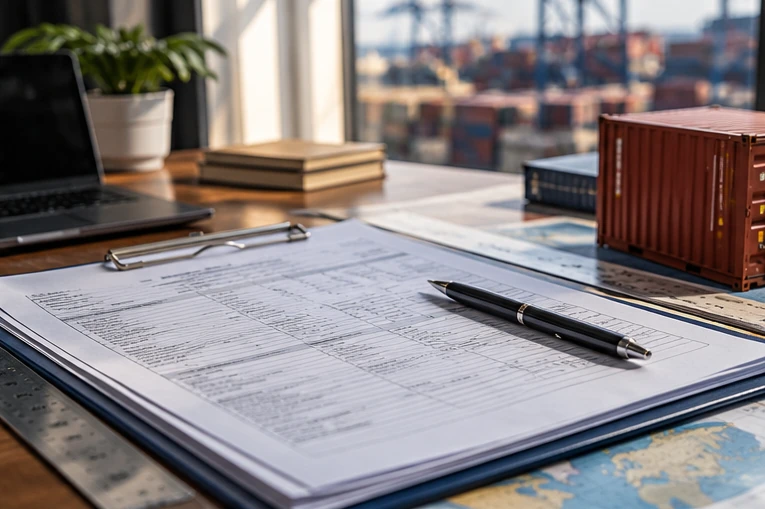
Check the document number, piece count, gross weight and routing against the booking. If the shipment has a special handling code, temperature instruction or dangerous-goods declaration, make sure that information travels with the cargo.
What an AWB records
An air waybill documents key details of an air cargo movement, including parties, routing, pieces, weight and handling information. Unlike a negotiable ocean bill of lading, the AWB is generally not a document of title.
Master and house air waybills
Freight forwarders may issue a house air waybill, while the airline issues a master air waybill. The identifiers are related but are not interchangeable when checking carrier events or customs messages.
Accuracy matters before acceptance
Provide the correct airport, commodity description, shipper and consignee particulars, package count, gross weight and dimensional details. Cargo declared as dangerous goods has additional rules and documentation.
Release and proof of delivery
A flight arrival is not a completed delivery. Handling, screening, customs, warehouse collection and onward transport all have separate milestones. Ask which reference is used at the arrival station.
Compare the air waybill against the booking
For four crates booked from PVG to FRA, the waybill should match the shipper, consignee, piece count, gross weight, handling code and airport pair. If an airline substitutes a routing or the declared cargo is altered, the shipper should reconcile the record before departure.
This is an illustrative planning example, not a current quotation, legal instruction or promise of transport capacity. Confirm shipment-specific requirements with the responsible carrier, broker or regulator.